

When regulators write rules for giants, startups often pay the price. This paradox was at the heart of our founder’s input at the SXSW Sydney panel discussion earlier this week.
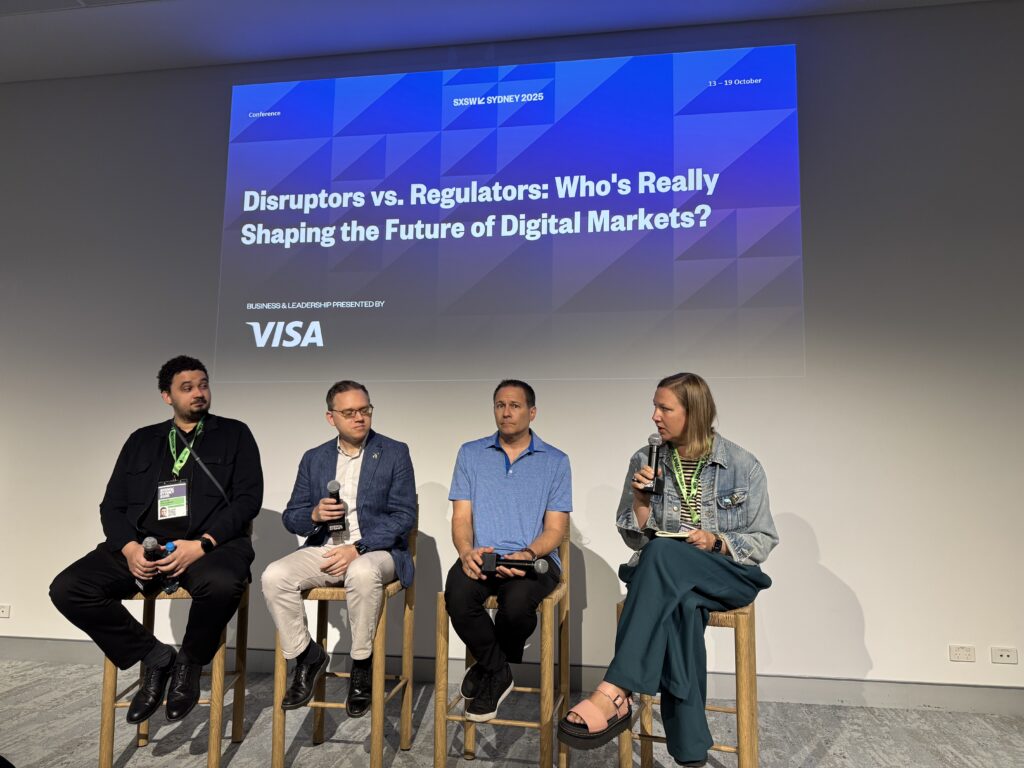
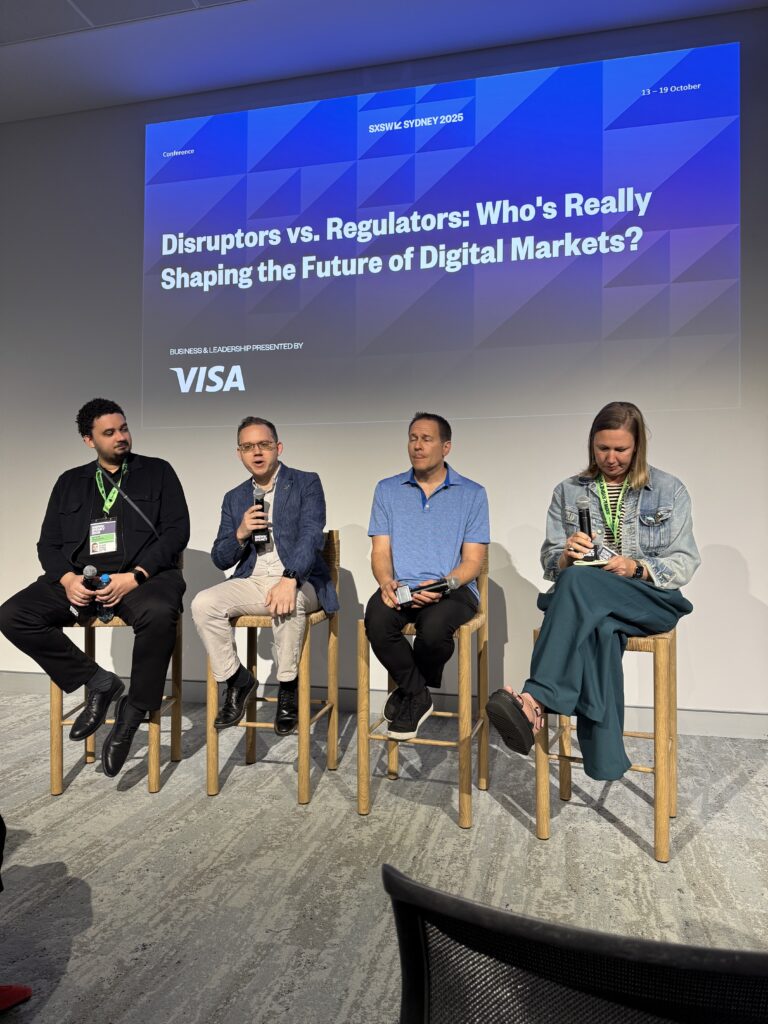
Our founder, Mitchel Volkering, had the opportunity to join a panel hosted by ACT | The App Association titled “Disruptors vs. Regulators: Who’s Really Shaping the Future of Digital Markets?” The conversation focused on the growing global impact of regulatory frameworks such as the EU’s Digital Markets Act (DMA), and how these policies affect innovation, investment, and where startups choose to operate and innovate.
The panel was moderated by Chelsea Thomas and also featured the brilliant Stephen Forte and Jad Meouchy. What became clear during the discussion is that regulation is no longer a “regional” issue, it is now a fundamental factor in how and where young companies grow.
Innovation follows clarity and mobility follows friction
A recurring message from the discussion was that startups are naturally mobile. They do not have the same geographic lock-in as legacy companies. As Jad Meouchy highlighted:
“a harsh regulatory environment isn’t going to stop an innovator from innovating, but it will stop them from innovating in that market. Mobility is baked into a startup’s model; it is pretty easy for companies like ours to pick up and move if we need to.”
This is the part policymakers often overlook: the talent and idea generation remain, but the value creation quietly relocates elsewhere.
Regulation designed for big tech can unintentionally harm small tech
The DMA was designed to rebalance power between large platforms and everyone else. However, in its current form, it is introducing new points of fragility for SMEs especially for those of us handling sensitive user data, where trust is our most valuable asset.
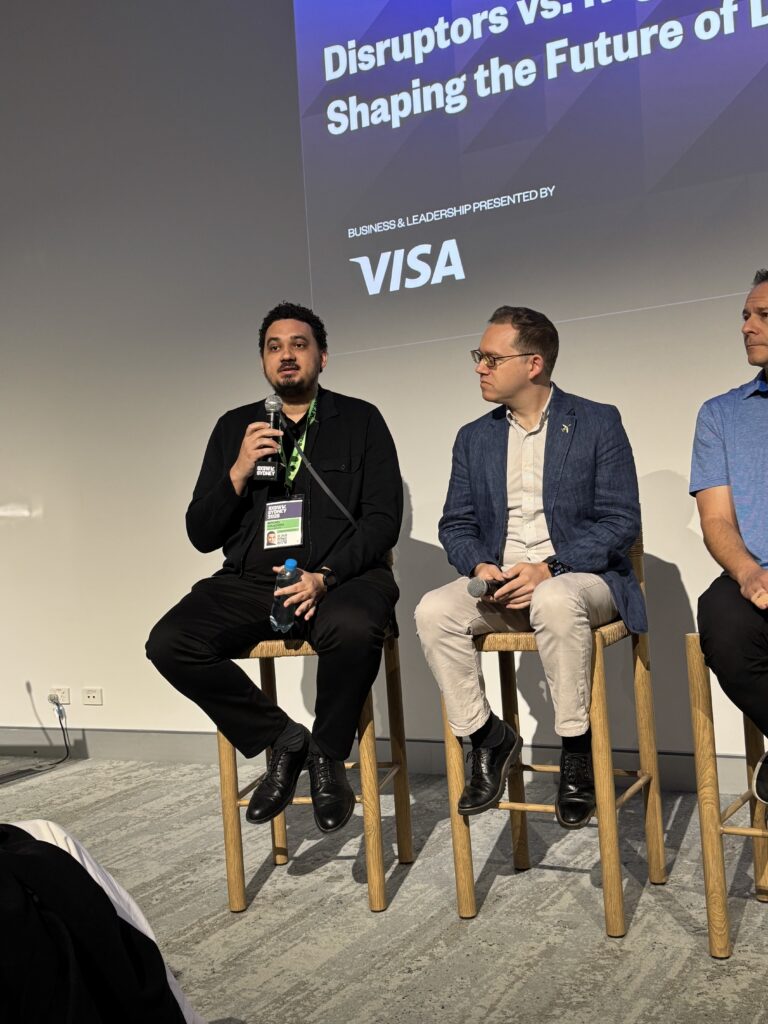
During the panel, our founder explained the real-world consequences from the developer’s side:
“companies like mine offload a lot of overhead and things we don’t want to deal with to the big platforms. We also look to them to help us build trust, but with the DMA, that trust is put at risk.” – Mitchel Volkering, founder of vaic.at.
When Apple’s privacy labels or Google’s Play Protect badges lose their meaning due to forced sideloading or interoperability requirements, small apps lose their primary trust signal to users. For companies dealing with personal data, this erosion of platform-backed trust isn’t just frustrating it’s existential.
The delays compound the problem. While US developers got immediate access to cutting-edge AI tools, European developers often wait months for compliance clearance. As our founder noted during the panel, “in Europe we’re getting delayed rollouts of key tools like AI. It can be really frustrating.”
This isn’t a theoretical critique. Startups increasingly have to choose between:
- Staying in their home market and absorbing higher legal and technical risk, or
- Moving their innovation stack to a jurisdiction with clearer guardrails and fewer moving parts.
Investment goes where scale is predictable
The investment perspective shared by Stephen Forte added an important macro lens to the problem:
“It’s almost like Europe is ignored by Silicon Valley and that is directly related to their regulatory structure. Our fund is about 12 years old, and our last major investment in Europe was before COVID. While DMA has made it worse, and I won’t start on the AI Act, GDPR was really the first regulation that prompted concern.”
This isn’t just one fund’s perspective. The numbers tell a stark story: EU startups raised ~€57B in 2023 compared to >€200B in the US, while the UK alone raised ~€21B. The gap isn’t just about market size it’s about predictability.
Capital flows to markets where scaling is not only possible, but predictable. Europe may not be losing founders but it is increasingly losing headquarters.

Closing reflection
The intention behind regulation is not the issue. Most founders I speak to believe in accountability, safety, and fair competition. The real challenge is execution: enforcement that disrupts trust instead of strengthening it leads startups to look elsewhere.
For vaic.at and for many others in similar positions the question is no longer “Should we comply?” but “Where is it still viable to build responsibly, securely, and at scale without regulatory uncertainty becoming the primary risk vector?”
The jurisdictions that figure out how to regulate for safety without suffocating innovation won’t just attract companies they’ll define the next decade of digital markets. More insights from the SXSW Sydney trip will follow in the coming weeks, but this discussion already made one thing clear: the future of innovation will not be shaped only by those who build technology but also by the jurisdictions willing to create an environment where responsible innovation can survive.

Comments
There are no comments yet.